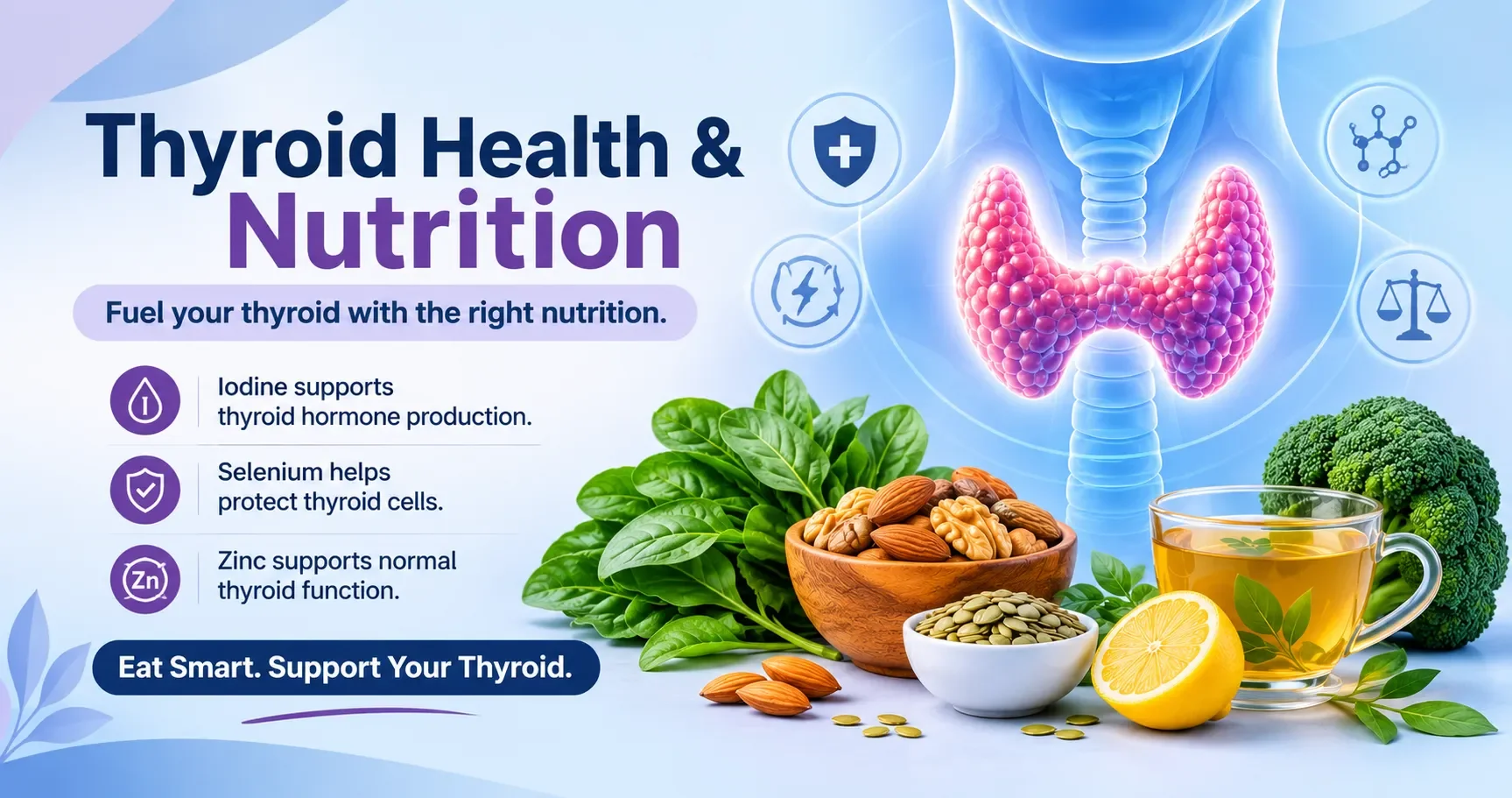
The thyroid is a small, butterfly-shaped gland at the base of your neck, yet it influences your metabolism, energy, body temperature, heart rate and mood. When it makes too little or too much hormone, the effects are felt almost everywhere in the body: constant tiredness, changes in weight, hair fall and mood swings are common signs.
Most long-term thyroid conditions are managed rather than "cured", and medicine prescribed by your doctor is the foundation of treatment. What you eat and how you live can still make a real difference to how you feel. In this article we cover the early warning signs, eight home habits that support thyroid health, and the foods worth watching.
What Is a Thyroid Disorder?
A thyroid disorder develops when the gland produces too little or too much thyroid hormone. There are two main types:
- Hypothyroidism (underactive thyroid): too little hormone, so body functions slow down. It can bring tiredness, weight gain, constipation, dry skin, thinning hair and a feeling of being cold.
- Hyperthyroidism (overactive thyroid): too much hormone, so body functions speed up. It can cause weight loss, a fast or irregular heartbeat, anxiety, heavy sweating and trouble sleeping.
Early Signs You Should Not Ignore
Thyroid problems usually build up slowly, so the early changes are easy to put down to stress or a busy life. Keep an eye out for:
- Constant tiredness even after a full night's sleep
- Unexplained weight changes, either gain or loss, without a change in diet
- Hair that is thinner, drier or more brittle
- Changes in bowel habits, with constipation more likely when the thyroid is underactive
- Feeling unusually cold or unusually hot
- Mood swings, irritability, anxiety or low mood, and trouble concentrating
- Dry skin and brittle nails
- A racing or irregular heartbeat
- Puffiness around the face or eyes
Any one of these can have other causes, but if they continue for weeks, get tested rather than guess. A simple thyroid test near me in Bhubaneswar (TSH, T3 and T4) can be done from home.
8 Home Remedies and Habits That Support Thyroid Health
1. Include selenium-rich foods
Selenium is a mineral your thyroid uses to make and process its hormones. Eggs, fish, whole grains and Brazil nuts are good sources. A little goes a long way, so do not overdo it or take selenium supplements without advice.
2. Get the right amount of iodine
Iodine is a building block of thyroid hormones, and too little can cause goitre (a swollen thyroid). Using iodised salt in your cooking is the simplest way to cover your needs. Too much iodine can cause problems of its own, so avoid iodine supplements unless a doctor recommends them.
3. Eat a balanced, mostly whole-food diet
Rather than depending on supplements, build meals around vegetables, fruit, whole grains, pulses, nuts, seeds and a suitable protein. Cut back on deep-fried and sugary foods, which add calories without nutrition and make weight harder to manage.
4. Include dairy if it suits you
Milk, curd and paneer provide protein, calcium and some iodine, and fit easily into a thyroid-friendly diet. If you are lactose intolerant, ask a dietitian about alternatives.
5. Manage stress in healthy ways
Long-term stress affects hormones, sleep, appetite and energy, so it can make thyroid symptoms feel worse. Deep breathing, yoga, meditation, time outdoors or simply a daily walk can help. If stress feels heavy, a professional can help.
6. Stay active
Regular exercise supports heart health, muscle strength, mood and weight control, all of which can be affected by thyroid problems. If your energy is low, start with a short walk and build up as you feel better.
7. Get tested regularly
If you often feel tired, notice hair loss, mood swings or a change in heart rate, a blood test that includes TSH and T4 shows how your thyroid is working. If you are already on treatment, follow your doctor's schedule for repeat tests so the dose stays right. A vitamin D test near me in Bhubaneswar or vitamin B12 test near me in Bhubaneswar is often added when tiredness is the main complaint.
8. Sleep enough
Poor sleep can worsen fatigue, mood changes, poor concentration and digestive problems that often come with thyroid disorders. Seven to eight hours a night will not treat a thyroid condition, but it helps you cope with the symptoms and supports general health.
Foods to Limit or Time Carefully
Most people with thyroid conditions can eat a wide range of foods. A few are worth taking in moderation:
- Soy products (tofu, soy chunks, soy milk): fine in a balanced diet, but soy can interfere with how well the body absorbs levothyroxine, so keep a gap and ask your doctor.
- Too much caffeine: heavy tea or coffee intake can aggravate symptoms, particularly in an overactive thyroid.
- Fried and highly processed foods: frequent intake can push up weight and the risk of obesity.
- Excess alcohol: heavy drinking is linked with disturbed thyroid hormone levels.
- Raw cruciferous vegetables (cabbage, cauliflower, broccoli, kale, radish): large amounts of the raw vegetable may reduce iodine uptake. Cooking them and eating them in moderation is usually fine.
Get Your Thyroid Checked From Home
If any of the signs above sound familiar, a blood test is the right next step. Our phlebotomist visits your home, collects the sample and gives you a free BP check-up during the visit. Reports reach you digitally within 24-48 hours. We offer home blood collection near me across 50+ localities, including Patia, Nayapalli and Rasulgarh. For an overall picture, consider a full body checkup near me in Bhubaneswar.
For more everyday habits that help, read our guide to 10 tips for maintaining a healthy lifestyle.
This article is for general information and does not replace advice from your doctor.