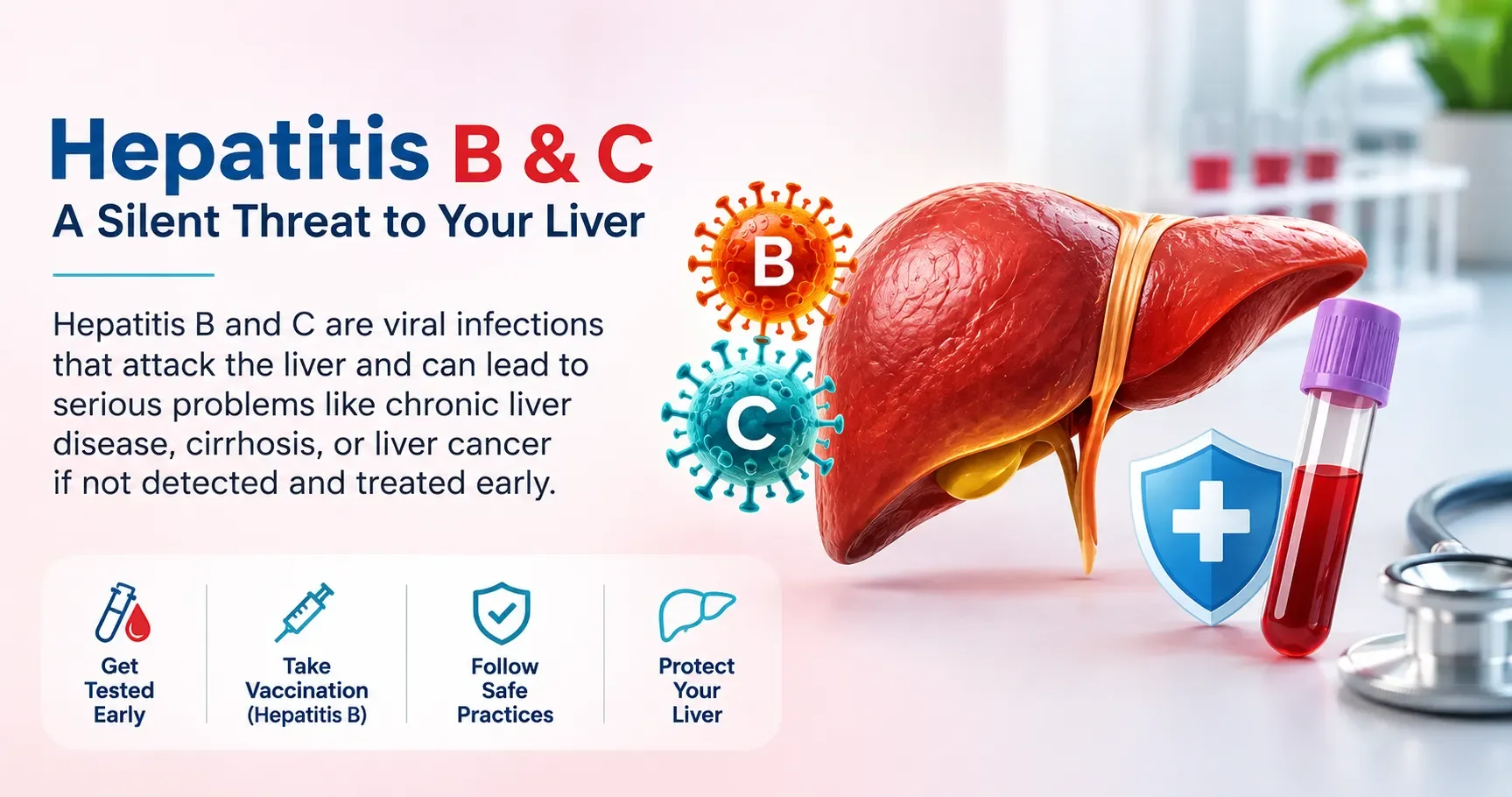
Hepatitis B and hepatitis C are both viral infections of the liver, and both are capable of staying silent for years. Plenty of people only find out they are infected when a routine health check throws up abnormal liver enzymes, or when a doctor investigates tiredness that has no obvious cause. Since the two viruses attack the same organ, they are often treated as if they were nearly the same thing.
They are not. Hepatitis B and C spread differently, only one of them has a vaccine, and the treatment goals are very different. Knowing where they diverge helps you judge your own risk and ask your doctor for the right tests.
What Are Hepatitis B and Hepatitis C?
"Hepatitis" simply means inflammation of the liver. The liver filters your blood, helps digest food, stores energy and clears out toxins, so when a virus keeps it inflamed for a long time, the effects can be serious.
Hepatitis B is caused by the hepatitis B virus (HBV) and hepatitis C by the hepatitis C virus (HCV). Either one can show up as a short-lived (acute) illness or settle in as a long-term (chronic) infection. Left unmonitored, a chronic infection can slowly scar the liver (cirrhosis), cause liver failure and raise the risk of liver cancer.
Hepatitis B vs Hepatitis C at a Glance
| Point | Hepatitis B | Hepatitis C |
|---|---|---|
| Virus | Hepatitis B virus (HBV) | Hepatitis C virus (HCV) |
| How it spreads | Infected blood and some body fluids, including sexual contact and mother-to-baby spread | Mainly infected blood; sexual and mother-to-baby spread are less common |
| Symptoms | Often none; may include tiredness, nausea, jaundice | Often none; may include tiredness, nausea, jaundice |
| Clears on its own? | Usually yes in healthy adults | Only in a minority of people |
| Chance of becoming chronic | Highest when infected as a newborn or small child | High; most infections persist without treatment |
| Vaccine | Yes | No |
| Treatment | Antivirals control the virus; cure is uncommon | Antivirals cure most people in 8-12 weeks |
| Reinfection | Immunity usually protects after recovery or vaccination | Possible even after a cure |
How Hepatitis B Spreads
Hepatitis B passes from person to person through infected blood or body fluids. The usual routes are:
- From mother to baby during delivery, which is the main reason newborn vaccination matters so much.
- Sexual contact with an infected partner.
- Shared needles or syringes, and unsterilised equipment used for injections, tattoos or piercings.
- Shared razors or similar items that carry traces of infected blood.
- Unscreened blood products, which is rare where blood is properly tested.
Hepatitis B does not spread through hugging, shaking hands, sharing a meal, drinking water or sitting beside someone who is infected.
How Hepatitis C Spreads
Hepatitis C travels almost entirely through blood. The usual routes are:
- Sharing needles or syringes, which is the biggest single route worldwide.
- Reused or poorly sterilised medical instruments.
- Blood or blood products that have not been screened.
- Contaminated tattoo and piercing equipment.
- Shared razors or other personal items with blood on them.
- Mother to baby during pregnancy or birth, though this is less frequent.
- Sexual contact, which can happen but is uncommon compared with blood-to-blood spread.
Like hepatitis B, hepatitis C does not spread through everyday contact, shared food or water.
Symptoms: Can You Tell Them Apart?
No. The symptoms overlap almost completely, and you cannot work out which virus you have from how you feel. When symptoms do appear, they can include:
- Persistent tiredness or weakness
- Loss of appetite, nausea or vomiting
- A dull ache in the upper right abdomen
- Dark urine and pale stools
- Yellowing of the skin or eyes (jaundice)
- Mild fever or joint pain
Symptoms can take weeks or months to appear after infection, and many people never notice any. That is why a person can carry either virus, and have liver damage building up, without feeling unwell.
Which Is More Serious?
Neither one is automatically worse. Both can lead to cirrhosis, liver failure and liver cancer if they go undetected for years. The difference lies in what you can do about them. Hepatitis C can usually be cured, so finding it early gives you a clear way out. Chronic hepatitis B is usually managed rather than cured, so it often needs long-term monitoring, and sometimes long-term medicine. Hepatitis B also has the advantage of being preventable by vaccination.
Can Either Infection Become Chronic?
Yes, but the odds differ. A healthy adult who catches hepatitis B usually clears the virus without lasting infection. Babies infected at birth and very young children are far more likely to carry it for life.
Hepatitis C behaves the other way around: only a minority of people clear it unaided, so most infections become chronic unless they are treated. Over the years the inflammation can progress from fibrosis (early scarring) to cirrhosis (extensive scarring that disturbs liver function). It is also possible to have both viruses together, in which case a doctor needs to plan monitoring and treatment for each.
How Are They Diagnosed?
A blood test is the only reliable way to know. Your doctor may advise testing if you had a possible exposure, are pregnant, have symptoms, or have abnormal liver function results. You can book a liver function test near me in Bhubaneswar to see how your liver is coping, and the hepatitis-specific tests are listed in our test catalog.
Hepatitis B tests
- HBsAg (surface antigen): shows a current infection.
- Anti-HBc (core antibody): shows a present or past infection.
- Anti-HBs (surface antibody): shows immunity from vaccination or from having recovered.
- HBV DNA: measures how much virus is in the blood.
If HBsAg stays positive for six months or more, the infection is generally considered chronic. You can look up each of these under hepatitis B test near me in Bhubaneswar in our catalog.
Hepatitis C tests
- Anti-HCV antibody: shows whether your body has ever met the virus.
- HCV RNA: detects the virus itself and confirms an active infection.
A positive antibody result does not always mean you are infected right now, since the virus may have cleared naturally or after treatment. The RNA test settles that question. If an infection is confirmed, doctors usually add further blood tests or a scan to check the liver. A hepatitis C test near me in Bhubaneswar can be booked from the same catalog.
Treatment: The Biggest Difference
Hepatitis B
Acute hepatitis B often resolves by itself, so care focuses on rest, relieving symptoms and follow-up tests. Chronic hepatitis B may need antiviral medicines such as tenofovir or entecavir. These keep the virus under control and reduce liver inflammation and long-term risk, but they seldom remove the virus completely. Some people need treatment for many years; others only need regular monitoring. The decision depends on viral load, liver inflammation, scarring and overall health.
Hepatitis C
Hepatitis C is treated with direct-acting antivirals, taken for roughly 8 to 12 weeks depending on the regimen. More than 95% of people are cured. A cure does not protect you from catching the virus again, so avoiding new exposure still matters.
Prevention
- Get vaccinated against hepatitis B. The full schedule gives strong protection, and newborns should receive it on time. Babies born to infected mothers may need extra treatment soon after birth.
- Never share needles, syringes or razors.
- Choose clinics, labs and tattoo or piercing studios that sterilise properly or use single-use equipment.
- Practise safer sex, which is especially relevant for hepatitis B.
- Remember there is no hepatitis C vaccine, so avoiding blood exposure is the only protection.
If you think you were exposed to hepatitis B recently, see a doctor quickly, because preventive treatment works best when given early.
When Should You Get Tested?
Do not wait for symptoms. Testing makes sense if you had a possible exposure, were treated with reused equipment, are planning or expecting a pregnancy, or have unexplained liver test results. Even after a hepatitis C cure, people with advanced scarring may need continued liver cancer screening.
A full body checkup near me in Bhubaneswar usually includes liver tests too, and you can add hepatitis tests on your doctor's advice. Our phlebotomists collect samples at your door, with a free BP check-up during the visit. Residents of Patia, Saheed Nagar, Chandrasekharpur and 50+ other localities can see our service areas for home blood collection near me.
This article is for general information and is not a substitute for medical advice. Please talk to your doctor about testing and treatment.